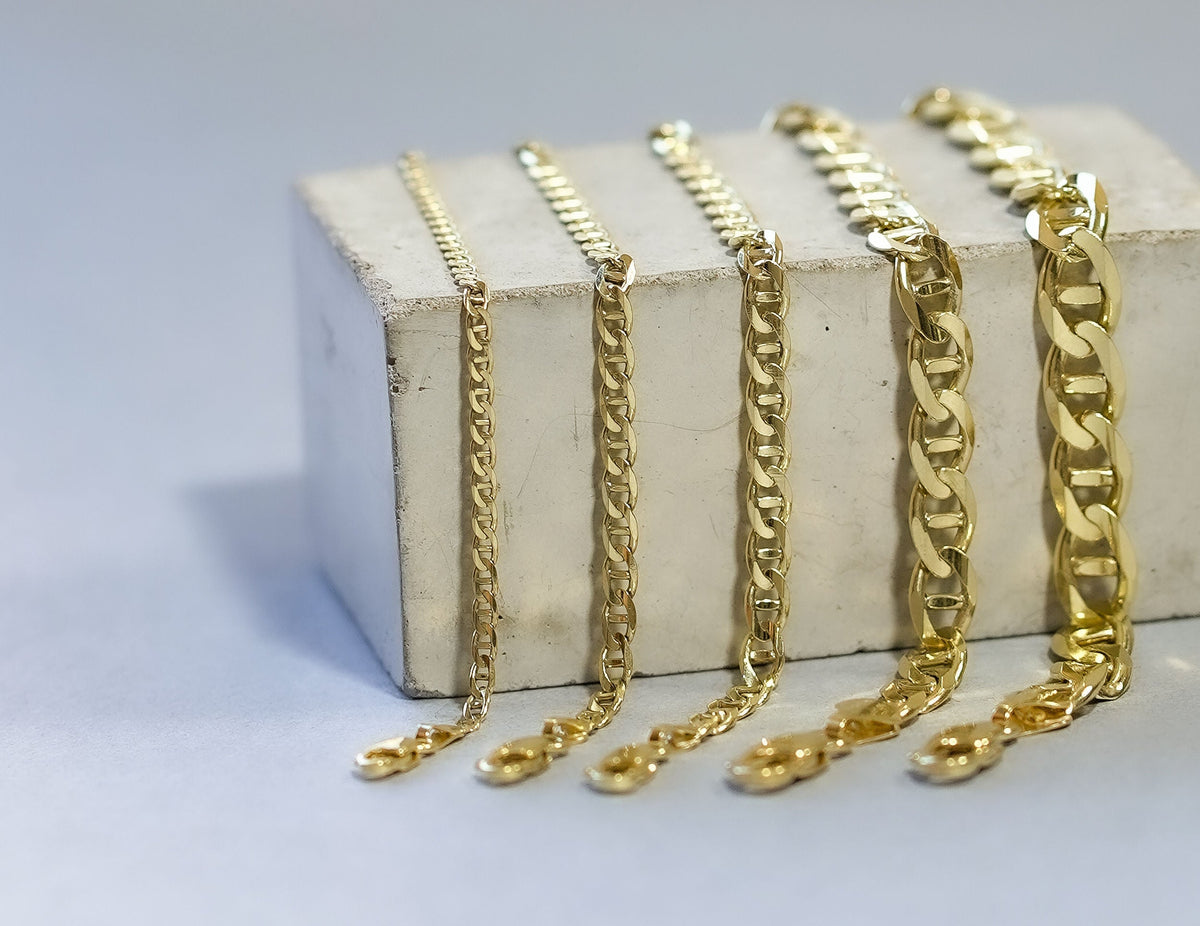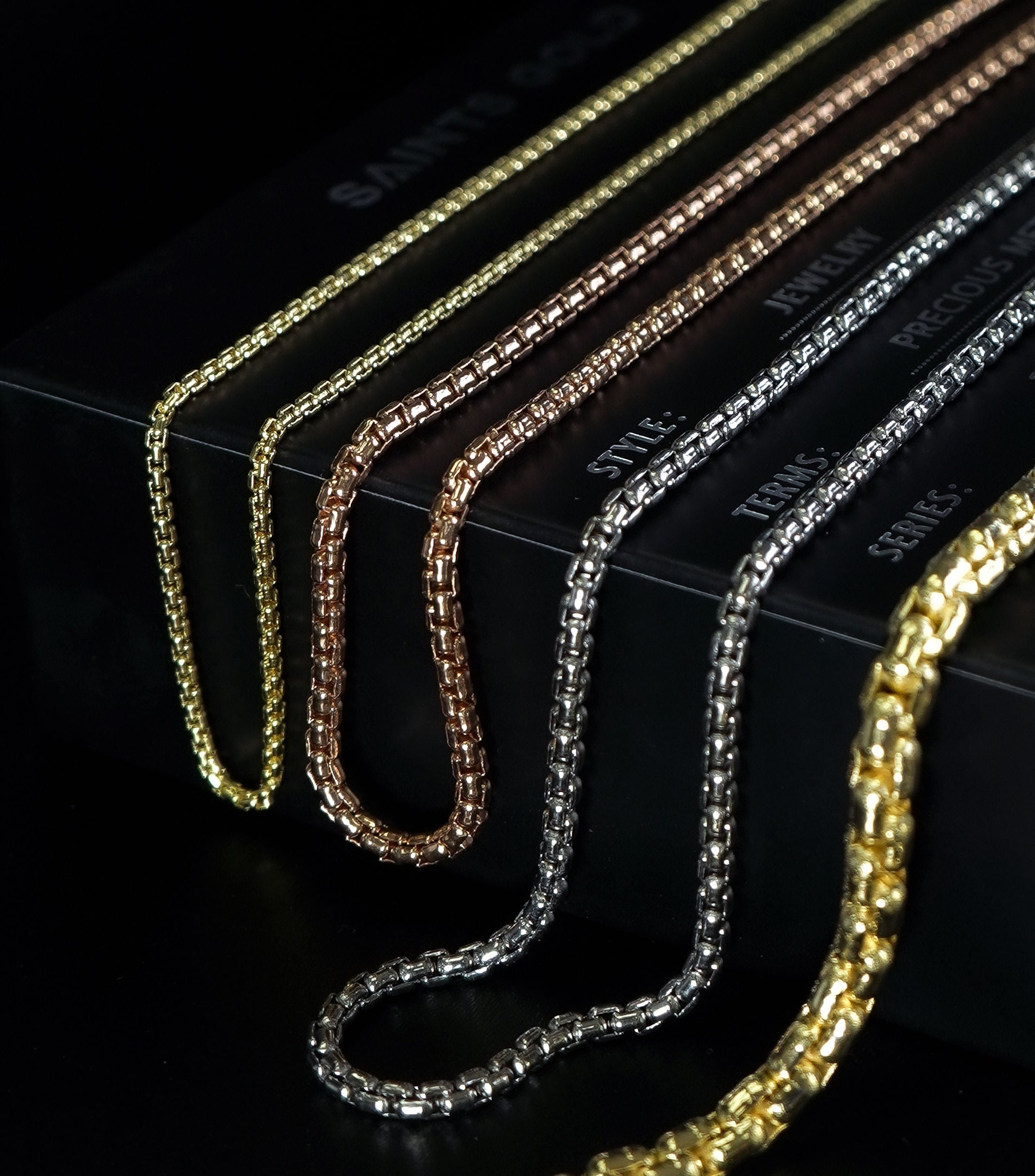

When shopping for high-quality men's solid gold jewelry, understanding the differences between the various gold types can make a big difference in your buying decision. The main difference between 18k and 22k gold is purity and durability.
- 18k gold contains 75% pure gold and is stronger, more durable, and usually better for everyday jewelry such as gold chains, bracelets, rings, and pendants.
- While 22k gold contains about 91.7% pure gold, with a richer yellow color and higher gold content.
According to the World Gold Council, 18-carat gold is 75% gold mixed with other metals such as copper or silver, while higher carat gold contains more pure gold.
Let’s break down the key differences between 18k and 22k gold so you can choose the right piece with confidence.
What is 18k Gold?

18K gold is 75% pure gold blended with 25% other metals, typically copper, silver, palladium, or zinc, depending on the color the jeweler is going for. That alloy mix is doing real work. It's what keeps an 18K ring from bending out of shape after six months of wear or a solid gold chain for men from stretching under its own weight.
One thing people don't realize until they're actually shopping: 18K gold isn't locked into one color. Because the alloy makes up a quarter of the metal, jewelers can shift that ratio to produce yellow, white, or rose gold, all still technically 18K, all still 75% pure. That flexibility is a big part of why designers lean on 18K for anything with intricate detailing or gemstone settings. It holds a prong. It holds a shape. It doesn't fight the design.
You'll typically see 18K stamped as 750, 18K, or 18KT. It shows up constantly in engagement rings, wedding bands, and fine jewelry meant to actually be worn, not just displayed.
What Is 22K Gold?

22K gold is 91.6% pure, with only 8.4% left over for alloy metals, usually silver or copper in small amounts. That tiny sliver of alloy is barely enough to change the color or add meaningful strength, which is exactly why 22K looks and behaves the way it does.
Visually, this is where 22K wins outright. The color is deep, warm, and unmistakably golden in a way that 18K simply can't match, no matter how well it's polished. There's a reason 22K dominates in cultures where gold jewelry carries weight beyond fashion, weddings, festivals, and gifting traditions. The richness of the color is the point.
The tradeoff is softness. With so little alloy to reinforce it, 22K bends and scratches more easily. It's not fragile in the sense that it'll snap, but it's not something you want to wear while gardening or hauling groceries. You'll see it stamped 916, and it shows up most often in bangles, traditional necklace sets, and pieces bought as much for value as for style.
18K vs 22K Gold: The Differences That Actually Matter
Here are the major differences between 18k and 22k gold.
| Features | 18k Gold | 22k Gold |
| Purity | 75% pure gold | 91.6% pure gold |
| Hallmark stamp | 750 | 916 |
| Color | Slightly muted yellow; also comes in white and rose | Deep, rich yellow only |
| Durability | More scratch-resistant, holds up to daily wear | Softer, prone to dents and scratches |
| Best for | Rings, chains, everyday jewelry, gemstone settings | Bridal sets, ceremonial pieces, investment jewelry |
| Price per gram | Lower | Higher |
Purity
This is the headline difference and the one everything else stems from. 22K contains more actual gold, 91.6% versus 18K's 75%. If pure gold content is your priority, whether for resale, tradition, or just wanting "more gold" in your gold, 22K wins on paper every time.
Durability and Scratch Resistance
Here's where 18K pulls ahead, and honestly, this is the part a lot of buyers underestimate until they've lived with a piece for a year. The alloy in 18K isn't filler. It's structural. It resists dents, holds its shape under daily friction, and generally ages better if you're someone who doesn't take your jewelry off for showers, workouts, or sleep.
22K, by comparison, shows wear. Not immediately, and not dramatically, but over time you'll notice thinning on high-contact edges and a softer surface that picks up fine scratches faster. That doesn't make it a bad choice. It just makes it a different kind of choice, one better suited to pieces you wear occasionally rather than pieces that live on your hand or wrist permanently.
Color and Appearance
18K has a warm, elegant tone, but it's noticeably lighter than 22K's deep, almost buttery yellow. Side by side, most people can spot the difference instantly, even without knowing the karat. If you're chasing that traditional, unmistakably "gold" look, 22K delivers it in a way 18K simply wasn't designed to.
That said, 18K's ability to shift into white or rose gold is a genuine advantage if you want something more contemporary or subtle. It's a style choice as much as a purity one.
Price and Value Retention
More pure gold means a higher price per gram, so 22K will almost always cost more than 18K for a comparable piece. That's straightforward.
What's less talked about is resale and long-term value. Because 22K holds more intrinsic gold content, it tends to retain value more predictably when weighed for resale or melt value. 18K still holds solid value; don't let anyone tell you otherwise, but if you're buying with half an eye on investment or passing something down, the math leans toward 22K.
Weight and Comfort
Gold is dense, and the more of it a piece contains, the heavier it feels. 22K jewelry tends to sit heavier on the hand or neck than an equivalent 18K piece. Some people love that weight. It feels substantial, expensive, real. Others find it uncomfortable for all-day wear, especially with chains or larger rings. This one really is personal preference, not a right or wrong answer.
Skin Sensitivity and Allergies
This doesn't get mentioned nearly enough. The alloy metals in gold, particularly nickel when it's used in white gold formulations, can trigger reactions in people with sensitive skin. 18K, with its higher alloy percentage, carries a slightly higher risk here, though reputable jewelers avoid nickel in favor of palladium or silver specifically to sidestep this. 22K, with its minimal alloy content, is generally the gentler option for sensitive skin, simply because there's less non-gold metal touching you in the first place.
If you've ever had a ring irritate your finger and assumed it was "fake gold," it may have just been the alloy, not the gold itself.
How to Identify 18K vs 22K Gold: Hallmarks and Testing
The fastest way to confirm what you're actually wearing is the hallmark. Look inside a men's solid gold ring, along a chain's clasp, or on the back of men's saint pendants. A stamp reading 750 or 18K means you're looking at 18K gold. A stamp reading 916 means 22K.
It sounds simple, and it mostly is, but stamps can be faked, especially on pieces bought from unverified sellers or marketplaces with no accountability. A stamp alone isn't proof. It's a starting point.
Professional Testing
For anything valuable, or anything you're buying secondhand, a proper test beats guesswork. Jewelers commonly use acid testing, where a small scrape reacts differently depending on gold purity, or XRF testing, which uses X-ray fluorescence to read the exact metal composition without damaging the piece. There's also the old streak test, dragging the metal across an unglazed ceramic surface to check the color of the mark it leaves, though this is more of a rough first check than a definitive answer.
None of these are things you should attempt at home with anything you actually care about. Leave it to a jeweler with the right equipment.
At SaintsGold, every piece we sell is hallmarked and verified before it reaches you, which is really just the baseline of doing this honestly. Gold jewelry is expensive enough that "trust me" shouldn't be part of the transaction.
Is 18K or 22K Gold Better for Everyday Wear?
18K, without much debate. The added alloy content gives it the structural resistance to handle daily friction, accidental knocks, and the general wear and tear of a piece that never comes off. 22K can technically be worn daily; plenty of people do it, but it will show its age faster.
Is 22K Gold a Good Investment?
Generally, yes, and this is one area where 22K has a real edge. Higher purity means the piece is worth closer to its gold weight at resale, which matters if you're buying with long-term value in mind rather than pure style. That said, "investment" in jewelry is always a loose term. Craftsmanship, brand, and design still factor into what you'll actually get back.
Which Should You Choose: 18K or 22K Gold?
It really comes down to how you'll wear it and why you're buying it.
Choose 18K if you want something durable enough for daily wear, versatile enough to come in different colors, and priced a bit more accessibly without sacrificing quality. It's the practical choice for rings, everyday chains, and anything with gemstone detailing.
Choose 22K if you want maximum purity, a richer traditional color, and a piece that leans more toward investment or ceremonial significance than daily rotation. Think bridal jewelry, festival pieces, or anything meant to be treasured rather than tossed on with your gym clothes.
Neither one is objectively "better." They're built for different jobs, and the right answer depends entirely on what job you need your gold to do.