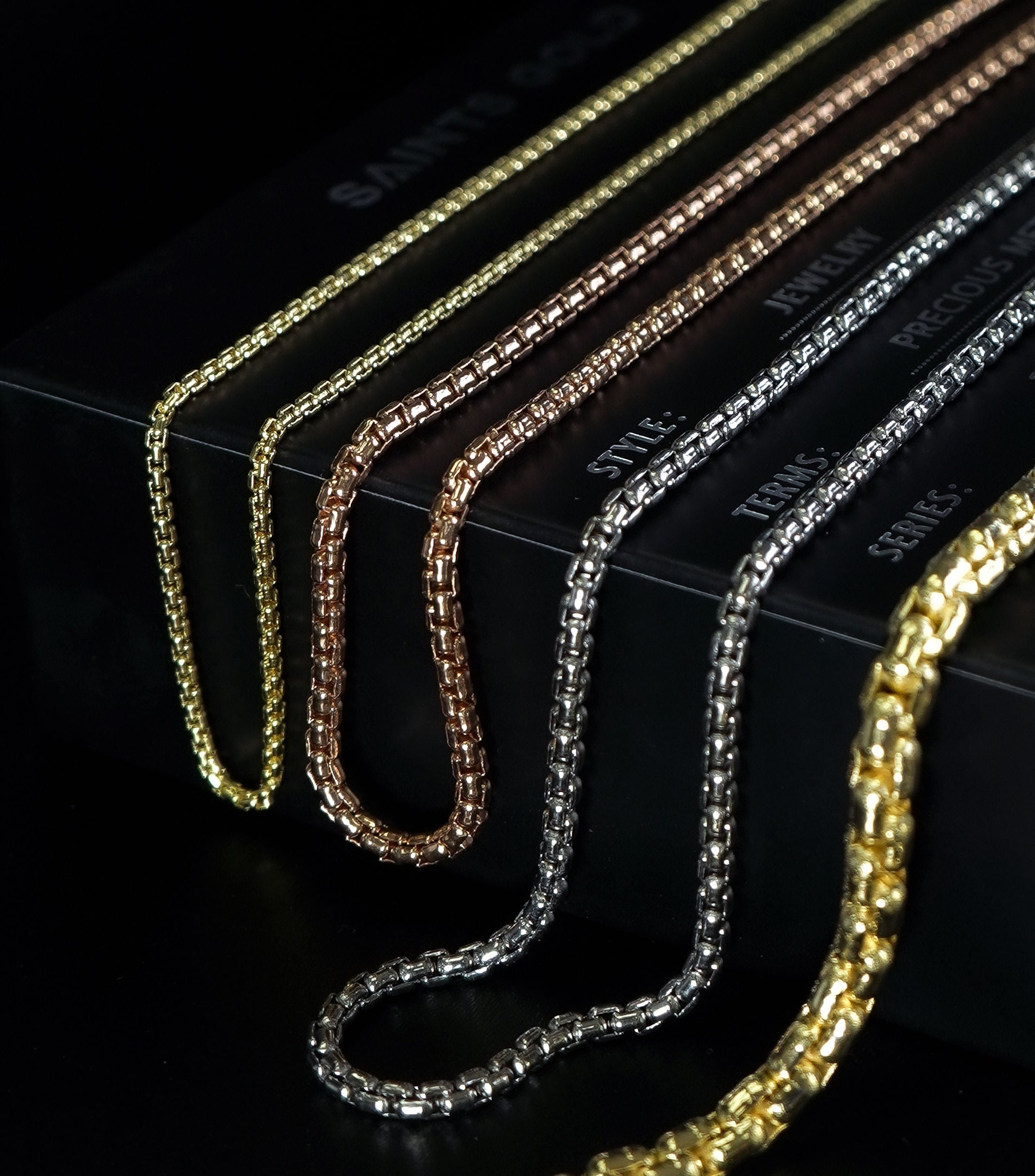

Gold bars are often the first thing people picture when they think about investing in physical gold. They’re straightforward, highly pure, and valued mainly for their gold content.
But that isn’t the only way to own precious metal.
A well-made gold chain gives you something a bar can't: an asset you can actually wear. It combines the intrinsic value of gold with craftsmanship, design, personal use, and potential heirloom value.
That doesn’t mean a gold chain will always produce a higher financial return than a bullion bar. Gold bars generally have an advantage when the goal is pure exposure to the gold price. The smarter choice depends on what you want your gold to do for you.
For buyers who want wealth they can wear, a real gold chain can be a compelling alternative.
Gold Chains vs. Gold Bars: What Makes Them Different?

The biggest difference comes down to what you're paying for.
A gold bar is primarily valued according to its weight and purity. Investment bars commonly contain 99.5% to 99.99% gold, while investment coins can also come in 22K or 24K forms. The World Gold Council describes bars and coins as one of the simplest ways to obtain gold as an investment.
A gold chain is different. Its value comes from several factors, including gold content, karat, weight, construction, design, craftsmanship, and market demand.
That makes jewelry more complicated to price, but it also makes it useful in a way bullion isn't. You can store a bar in a safe. You can wear a chain to work, dinner, or a special event.
That distinction matters if you don't want your entire gold holding to sit untouched in storage.
A Gold Chain Is an Investment You Actually Use

A solid gold chain does something a bar structurally cannot: it holds value while you wear it. Whether it's a 14K gold chain everyday piece or a bolder 22K gold chain design, the chain functions as both a wearable asset and a personal style statement. Different chain styles serve different aims. This means the investment is working for you twice, once financially and once as something you'd have bought anyway.
That distinction matters more than it sounds. A gold bar bought purely for wealth preservation generates zero return on the years it spends in a bank locker. A chain generates value the whole time you own it, in the form of use, not just in the form of price appreciation.
Resale Value and Liquidity: How Chains Actually Hold Up
Bullion is easier to price, but easier to price isn't the same as more valuable to sell. Gold chain resale value often reflects more than raw weight. Craftsmanship, popular link styles, and brand reputation all factor into what a buyer or gold dealer will pay. A chain with strong market demand and verifiable purity can move through the secondary market just as readily as a bar, sometimes commanding a premium a bar never could.
Trust is the variable that decides how much of that premium survives the sale. Chains sold with clear purity marking, transparent hallmark or BIS-equivalent certification, and an accurate weight disclosure hold their value far better than pieces where a buyer has to guess. That's the standard every SaintsGold chain is built and sold against: documented purity, disclosed weight, no ambiguity at resale.
Purity, Karat, and What the Numbers Actually Mean
Purity is where bars and chains are compared most directly, so it's worth being precise about it. 24K gold is close to pure and rarely used in jewelry because it's too soft to hold a design. 22K gold balances richness of color with wearability better than 18K. 18K gold chain trades a little gold content for durability and a lower price point, and 14K gold is tougher than 18K, 22K, and 24K, built for chains that get worn daily without complaint.
None of these karat levels are a compromise; they're a choice about how the chain will be used. The intrinsic value tracks the spot gold price the same way a bar's does. The difference is the making charges and design work layered on top, which is the part of the price a bar simply doesn't carry, and the part that, done well, keeps paying you back at resale.
Customization Adds a Kind of Value Bars Can't Touch
A bar is identical to every other bar of the same weight and purity. A chain isn't. Link style, thickness, length, and finishing all shape both how it looks and what it's worth. Engraving, custom sizing, and design choices turn a gold chain into something specific to the person who owns it, without ever compromising the underlying gold purity that determines its base value.
That personal layer is also a market signal. Popular, well-executed designs tend to hold demand longer than generic ones, which is part of why craftsmanship shows up as a real factor in gold jewelry resale value, not just a sentimental one.
Timeless Gold Chains Can Become Heirlooms
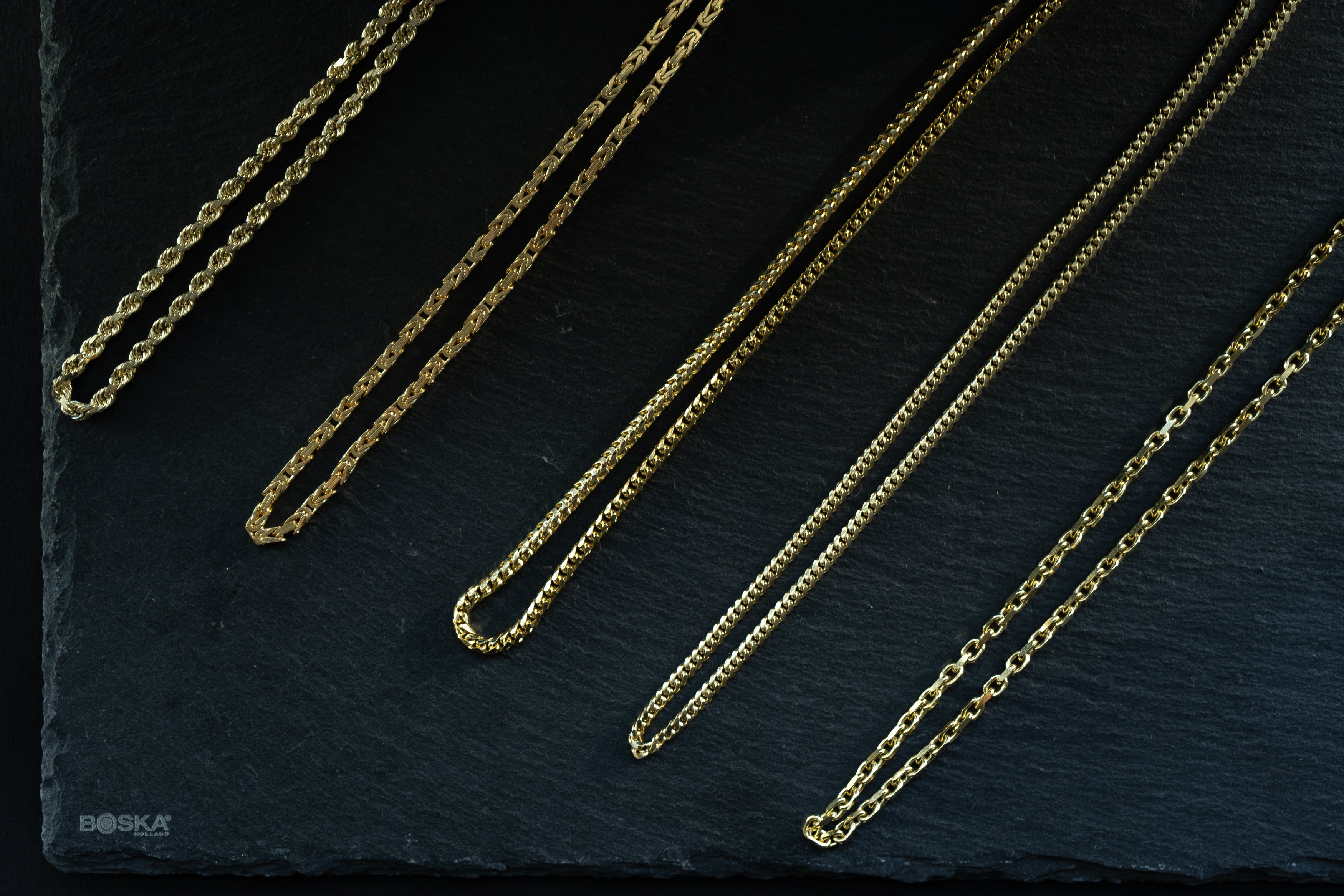
Trends in jewelry come and go, but a classic men's gold chain (Cuban, Figaro, rope, or box link) has stayed in rotation for decades because the design itself doesn't age out. A gold rope chain offers texture and movement. A Cuban link gold chain provides a bolder profile. A Franco chain gold design offers a cleaner, structured appearance.
For women's gold collection, finer chains, pendant chains, paperclip designs, and other styles can provide the same combination of precious-metal ownership and personal wear
That's a different kind of durability than the physical toughness of 14K versus 22K gold, but it matters just as much to long-term value. A piece people still want to wear in ten years is a piece that's still easy to sell in ten years.
Where Gold Bars Still Make Sense
None of this means bars are the wrong choice for every buyer. If the goal is pure bullion investing, moving large sums into gold with the lowest possible premium, or holding a hedge against currency and wealth erosion with no interest in wearing the asset, a bar bought at a fair margin over the spot gold price is still a straightforward, defensible choice. Storage and insurance costs are real, but so is the simplicity of valuing it.
The honest comparison isn't chains versus bars as rivals. It's matching the purchase to the goal. Buyers who want maximum exposure to raw gold price movement with minimal complexity lean toward bars. Buyers who want a purchase that holds value and earns its keep day-to-day lean toward a well-made chain.
Gold Chain or Gold Bar: Which Should You Buy?
A gold bar is efficient because it keeps the focus on gold.
A gold chain is compelling because it gives gold another purpose.
You can wear it. You can style it. You can pair it with gold bracelets, gold pendants, or gold rings. You can eventually pass it to someone else.
For buyers looking for USA-made gold jewelry, the same purchasing principles apply: verify the karat, understand the weight, evaluate construction, compare the price, and buy from a seller that clearly explains what you're getting.
A reputable gold jewelry store shouldn't need exaggerated promises about future returns. The product should stand on its material quality, craftsmanship, transparency, and design.
SaintsGold offers 14K, 18K, and 22K gold chains alongside other jewelry pieces, giving buyers different options based on purity, style, and intended use.
The smartest gold purchase isn't necessarily the one that promises the highest return. It's the one whose value makes sense for your actual goal.
If you want pure bullion exposure, a gold bar may be the better fit.
If you want physical gold that can become part of your daily life, a well-chosen solid gold chain offers something a bar never can: wealth you can actually wear.