


A bejeweled Jesus piece is a Jesus-head pendant decorated with diamonds, cubic zirconia, or other gemstones, usually crafted in gold. Its defining features are the sculpted image of Jesus, often shown wearing a crown of thorns, and the use of gemstones to add brilliance and detail.
The design has roots in Christian jewelry but developed a much broader cultural identity through hip-hop. Large gold pendants, diamond-covered faces, and custom-made pieces turned the Jesus piece into a recognizable form of luxury jewelry.
A bejeweled design also raises practical questions. How much should one weigh? Does a heavier pendant mean better quality? What chain works best? Are diamonds worth choosing over CZ? And how does a jeweled Jesus head differ from a simpler religious pendant?
The answers depend on construction, materials, proportions, and the look you want to achieve.
What Is a Bejeweled Jesus Piece?
A Jesus piece (sometimes spelled “Jesus piece”) is specifically a pendant depicting Jesus’ face rather than the full crucifix figure. The word “bejeweled” simply means it’s decorated with stones. In practice, a bejeweled Jesus piece has:
- A sculpted three-dimensional portrait of Jesus with detailed features (eyes, nose, beard, hair). Many designs include the crown of thorns as part of the head.
- A gold body (usually yellow or white gold in 14K or 18K) that forms the base metal.
- Gemstones set into the pendant. This could be diamonds, CZ, or colored stones placed on specific areas (eyes, crown) or covering much of the surface for an “iced” effect.
Unlike a flat medal, a quality Jesus piece is sculptural; you can see contours of the face from different angles. The bail (the loop at the top) is also important: it must be strong and wide enough to fit a thick chain. The term bejeweled means it has noticeable stonework; otherwise it might simply be called a gold Jesus pendant.
The History of the Jesus Piece in Hip-Hop
The Jesus piece has long roots as a Christian emblem, but its fame in fashion began in the 1990s hip-hop scene. The Notorious B.I.G. (Christopher Wallace) played the biggest role. He commissioned jewelers like Tito Caicedo of Manny’s on West 47th Street in Manhattan’s Diamond District to create custom pendants. Wallace famously paid around $10,000 each for hand-crafted, diamond-studded Jesus pieces and gave them to friends or wore them himself. This publicity – on music videos and album covers – made the Jesus piece a visible symbol of success and faith.
In fact, an exhibition at the American Museum of Natural History notes that Biggie’s gold Jesus piece became “an iconic symbol that came to represent faith, struggle, and success” in 1990s rap. While other early adopters included Ghostface Killah (Wu-Tang Clan) and Jay-Z (who later wore Biggie’s own piece), Biggie’s version set the tone: large, detailed, and covered with gems.
After the 90s, the tradition spread. Jewelers like Jacob Arabo (Jacob & Co.) also began making Jesus pieces for stars like Jay-Z and Kanye West. In the early 2000s, Kanye famously had a custom piece with gems in Jesus’s hair and eye colors. Over time, the design diversified: bigger sizes, full diamond coverage, colored stone details, and different gold tones. Today’s hip-hop artists (Kanye, Kendrick Lamar, etc.) continue the trend.
What Makes a Bejeweled Jesus Piece High Quality?

A high-quality bejeweled Jesus piece isn't defined by its weight or number of stones alone. Gold purity, construction, sculptural detail, stone setting, and the bail all contribute to the finished piece.
- Gold quality and construction: Top pendants use solid 14K or 18K gold for strength. (Saints Gold’s own collection of solid gold jewelry includes many such pieces.) Solid metal means heft and durability; hollow pieces are lighter but less impact-resistant. The gold’s color (yellow or white) and karat affect price and look. High-quality pieces won’t look thin or poorly polished.
- Sculptural detail: Inspect the face relief. Quality work has well-defined eyes, nose, lips, beard, and hair. The crown of thorns should look realistic, not merely an outline. Depth matters because a flat pendant with engraved lines isn’t the same as a carved figure. Fine finishing and symmetry (both sides of face match) signal craftsmanship.
- Gemstone setting: Stones should be even and secure. Look for consistent pavé or prong settings. (In Saints Gold’s designs, for instance, the stones are VS1 clarity, set closely together.) Diamonds should appear sparkly and white; CZ should still look clear. Avoid visible glue or gaps.
- Bail construction: The bail (loop connecting to the chain) must be sturdy. A heavy Jesus piece needs a thick, well-joined bail so it won’t break. The opening should fit common chain sizes; otherwise the pendant risks falling off. Some high-end pieces use a hinged or sliding bail that moves as the chain moves, reducing stress. Saints Gold’s Jesus piece, for example, includes a diamond-covered hinged bale for security on big chains.
Diamond, CZ, or Other Gemstones: Which Is Right for a Jesus Piece?
The right stone depends on the appearance, durability, and budget you want.
- Natural diamonds: Offer maximum durability and brilliance (hardness 10). They create the most intense sparkle and hold value. A Jesus piece with diamonds is classic for the true “iced” look. The downside is cost: high-carat coverage can be very expensive.
- Cubic zirconia (CZ): A lab-made gem that looks like diamond but costs far less. CZ can achieve similar optical sparkle in large amounts, making a fully iced appearance affordable. However, CZ is softer (around Mohs 8–8.5) and can scratch or lose shine over years. It also lacks the rarity of diamonds.
- Colored gemstones: Using rubies, sapphires, or emeralds adds personalized color. These are often just accents (e.g., the crown of thorns in red ruby or the eyes in blue sapphire). Colored stones stand out against white or yellow gold. They’re typically more expensive per carat, so they appear in smaller quantities or special designs.
If value and permanence matter, diamonds win. If you want big bling on a budget, CZ is a practical choice. Color stones let you personalize; they’re neither cheaper nor necessarily more durable, but they make your piece unique
How Much Should a Jesus Piece Weigh?
There’s no specific number; weight depends on size, thickness, and materials. A large solid-gold Jesus piece with full diamond coverage might weigh 15–20+ grams. A hollow version with fewer stones could be under 10 g.
Saints Gold’s Hollow 14K CZ Jesus head weighs just 7 g at 40×20.5 mm (including bail) thanks to its open back, whereas a similar solid piece might double that weight.
Don’t judge quality by weight alone. A heavier pendant simply has more metal (or denser stones), but a lighter hollow piece can look just as big. Instead, compare dimensions and construction: a 10 g solid piece might have thicker gold and more gemstones than a 10 g hollow piece.
When buying, make sure the pendant feels substantial (if it’s solid) and the stones are secure. A very heavy piece on a thin chain could also cause wear. Aim for balance: enough weight to feel premium, but not so much that it’s uncomfortable or uneven on the chain.
How Big Should a Bejeweled Jesus Piece Be?
The best size depends on your chain, proportions, and intended look, not on a universal measurement.
Small pendants (around 1–2 cm) offer a modest accent. Medium pendants (2–3 cm) are the most common statement size. Extra-large pieces (4 cm+) definitely make an impact but can overwhelm smaller frames. Choose a size that fits your build and clothing.
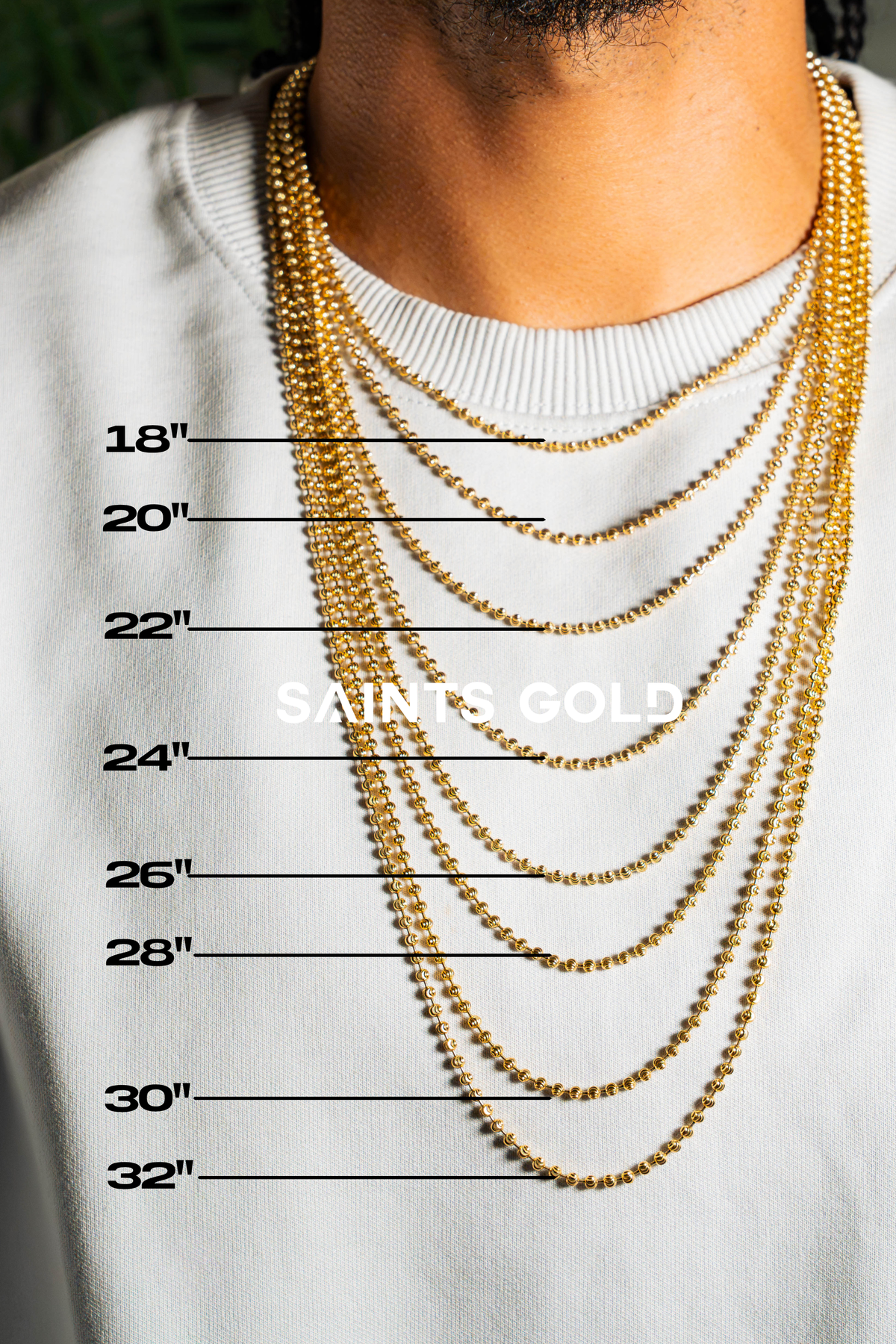
The pendant should match the chain’s width and length. A very large pendant looks balanced with a thick Cuban or rope chain (8–10 mm wide or more). A petite Jesus face can use a finer Franco or box chain. Also consider neckline: a big pendant hangs lower on long chains, whereas short chains place it near the collarbone.
Bigger isn’t always better. A huge pendant can lose facial detail or bump against the chest when moving. Think about how often you’ll wear it: giant pieces are eye-catching but may not suit daily wear. Often, a well-proportioned medium-size piece delivers the most polished look.
What Chain Goes With a Bejeweled Jesus Piece?
A bejeweled Jesus piece usually works best with a chain that can support its size and visual weight without competing with the pendant.
- Cuban link chain: A thick Cuban chain is a classic choice. Its strong, uniform links complement the bold style of a large gold Jesus piece. For a fully iced-out pendant, an 8 mm or wider Cuban often looks balanced.
- Rope chain: The twisted rope pattern offers texture alongside a smooth pendant. Rope chains are versatile: 5–7 mm ropes work well with medium pendants, while thicker ropes (8 mm+) can hold substantial pieces. The intertwining links echo the complexity of the jeweled face.
- Franco/Box/Other structured chains: A tight-link Franco chain or a box chain provides a clean, durable foundation. These styles have flat surfaces that let a pendant hang neatly. They are good for very heavy pendants because they sit flat on the skin and distribute weight evenly.
The chain should slide through the pendant’s bail comfortably. If the pendant has a large bauble bail (common on hip-hop pendants), almost any thick chain will fit. Pay attention to chain length too: a 20–24″ chain is typical for a Jesus piece.
You can layer a Jesus piece with other necklaces, but keep them thinner and simpler. The Jesus pendant should remain the focal point. For example, a 24″ Cuban chain with a Jesus pendant in front, and maybe a 22″ small curb chain as backing, is a common style. Avoid stacking multiple bulky pendants together – it looks cluttered.
How to Style a Bejeweled Jesus Piece
A bejeweled Jesus piece already carries substantial visual detail, so styling works best when the rest of the necklace setup has a clear hierarchy.
- Wear it as a statement: Let the pendant and its chain dominate. A single substantial chain (like a Cuban or thick rope) with the Jesus piece creates an impactful look. This is classic hip-hop style. Wear it over a plain shirt or hoodie, so it really stands out.
- Layer with finer chains: Add one or two thinner necklaces for interest, but make sure they are much lighter. For instance, pair the Jesus piece with a couple of delicate chains at different lengths. The supporting chains should not compete with the pendant’s presence.
- Match the metal: Traditionally, keep the chain and pendant metal the same color. A yellow gold Jesus piece looks cohesive on a yellow gold chain. White gold pieces pair with silver or platinum chains. If you mix metals, do it deliberately (for example, a white gold pendant on a white gold chain with a tiny yellow gold accent necklace).
- Let the pendant lead: A bejeweled Jesus piece is already very detailed and flashy. Avoid wearing other large pendants alongside it. Let it hang centered on your chest, especially if it’s heavily iced, this ensures all attention stays on its design.
Essentially, treat your Jesus piece as the outfit’s centerpiece. Understated clothing (solid colors, simple collars) will make the pendant pop.
Other Jesus and Mary Pendant Styles

Religious pendants come in many forms beyond the fully iced Jesus head. Saints Gold offers several related designs:
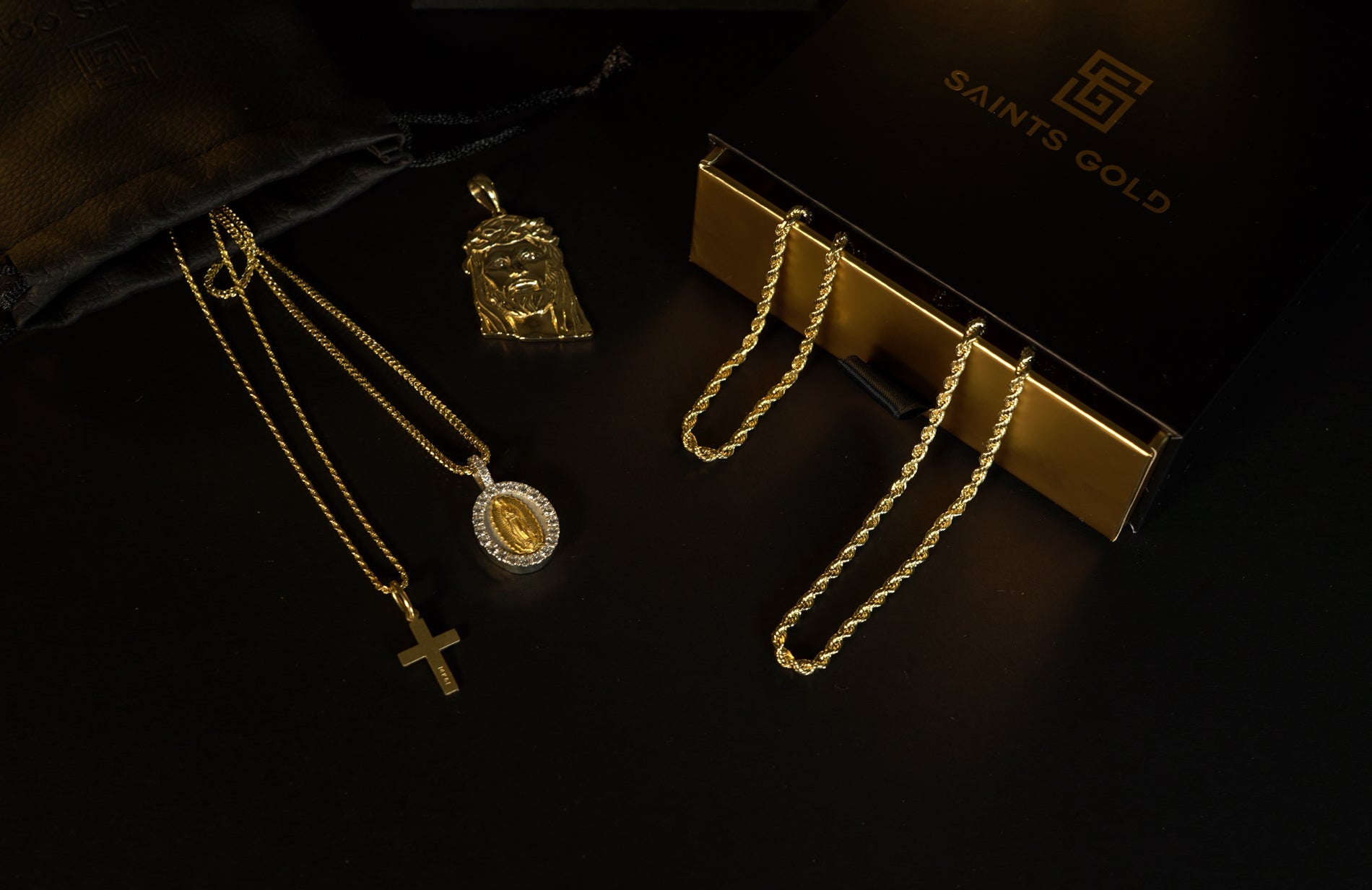
- Italian Mary and Jesus Oval Charm (14K): An oval relief charm showing both Jesus and Mary. It’s a traditional medal style, not heavily jeweled, that focuses on the sacred figures together.
- 18 mm Scalloped Double-Sided Jesus & Mary (18K): A round pendant with scalloped edges, depicting Jesus on one side and Mary on the other. Double-sided medals like this emphasize both figures and often have textured, non-gem finishes.
- Double-Sided Jesus and Mary (18K): A similar concept without the scalloped border. One side is Jesus, the other is Mary. These are solid gold, one-piece casts (not bejeweled), highlighting portrait engraving.
- Hollow 14K Gold CZ Jesus Head: A lighter version of the Jesus head, set entirely with cubic zirconia. It has a hollow back and uses CZ instead of diamonds. This creates the sparkling look at lower weight.
- Each style caters to different tastes: some focus on two religious figures or lighter weight. The fully bejeweled Jesus piece emphasizes maximum sparkle and detailed gold carving, whereas these other designs emphasize iconography or affordability.
For a broader selection of religious pendants, see Saints Gold’s Solid Gold Pendants collection.
How to Choose the Right Jesus Piece for Your Style
The right Jesus piece depends on its construction, size, gemstone treatment, chain, and how you plan to wear it.
- Understated vs. Statement: Decide how bold you want to be. A small plain-gold Jesus head (even with tiny gems) can be an everyday talisman. A large, fully iced piece is a statement – great for special occasions or when you want to stand out.
- Chain pairing: Plan the chain together with the pendant. For a mid-sized Jesus piece, a 5–8 mm Cuban or 4–6 mm rope works well. For a small pendant, a skinny chain or box chain is better. The chain should visually match the pendant’s weight.
- Comfort and weight: If you prefer light jewelry, look at hollow designs or CZ stones. If you want it hefty, choose solid gold with diamonds. Keep in mind a very heavy pendant (10+ grams) can tire your neck. Test how it feels.
- Styling focus (religious vs. fashion): If you wear it mainly for faith, subtle styling works. If you’re embracing hip-hop fashion, a glamorous iced design is fitting.
- PersonalizationCustom jewelry service lets you specify metal (14K vs 18K), dimensions, stone types (CZ or diamond), and colors (rubies/emeralds) to create your ideal piece. If you have a particular vision (size, gem layout, chain style), custom ordering ensures the pendant fits your exact preferences.
Match the piece to how you’ll wear it. Think about the everyday or event use, the outfit it will complement, and the feeling you want it to evoke. A well-chosen chain and thoughtful styling make even a spiritual pendant look polished and intentional.
Conclusion
The bejeweled Jesus piece lies at the crossroads of faith symbolism, fine jewelry, and hip-hop culture. There is no single “right” version, from modest gold designs to fully iced masterpieces, each piece reflects personal style and meaning. When choosing one, focus on quality craftsmanship (solid gold, secure stones), the right proportions for your body and chain, and a style that fits how you live and dress. That way, your Jesus piece will not only look incredible but will also feel meaningful and intentional every time you wear it.

1 comment
Evan Keefe
Please let me get a yellow gold bejeweled Jesus piece with the blue sapphires I need it saints!?
Please let me get a yellow gold bejeweled Jesus piece with the blue sapphires I need it saints!?